Showing posts with label bill paxton. Show all posts

Tuesday, March 20, 2012

UNTAPPED BLOOD


Is it fair to say the glory days of Carpenter, Romero, and Craven are behind them? Should they fade into obscurity with what little respect they have remaining and perhaps work on their memoirs? Admittedly, Carpenter will always get a pass from me, but even the most cynical movie fan has to admit his "Masters of Horror" episode "Cigarette Burns" was damn good, and though his latest feature, The Ward, may have been derivative and cliched, the direction showed signs of life and enthusiasm. Is it Halloween or Escape From New York? God no - it's not even Vampires. But it's not the train wreck people say it is. However, I'll admit the Carpenter of now is not the Carpenter of '77-'88.

I don't mean to make it sound like without these heavy weights the genre is dead. Likewise, there are plenty of fresh faces out there giving us horror fans exactly what we need: James Wan, Brad Anderson, Lucky McKee, and the less heralded Christopher Smith, Jim Mickle, and Patrick Lussier.

But there are directors out there who have already shown a knack for our genre. Though they have yet to make an outright horror film, something is clearly festering inside these directors that needs to be explored.

Let's start with the most obvious:

Mel Gibson
I'm going to avoid going for the more generic argument by reminding you just how violent and splattery Gibson's The Passion of the Christ was. It's a cheap shot to the filmmaker, and it's also pretty disrespectful to the genre we're all supposed to love. But time and time again I've seen people disparage Gibson's very red Passion as nothing more than a torture porn film. "He should direct a Saw sequel!" I once saw a moron say—a moron who apparently believes that's all a horror film amounts to: chains and blood and flying limbs. It's an unfair statement on every level I can imagine. First and foremost, wherever your religious (or non-religious) views lie, there's no denying Passion was a powerful film. I personally don't have one faithful bone in my body – my time on planet Earth has been pretty instrumental determining that – but I was moved by Passion. Quite highly. And while the scenes of torture were effectively disturbing (and rightfully so), they are not the reasoning behind Gibson's potential as a genre director. No, I speak of the scenes where Jesus frequently sees Satan staring at him from within the crowd of the jeering and judging. And this Satan is not the Satan of biblical or mythical lore. It's not even the Satan created by Hollywood. This is a Satan whose body is emaciated, whose sex is indeterminate, and whose all-white skin makes him stand out as he floats smoothly throughout the crowd. He holds a too-large deformed baby in his arms, and he stares at Jesus with eyes filled both with spite and sympathy. And let's not forget the scene where Judas is harassed by demonic children with insane sharp teeth and monstrous sneers before the man hangs himself from guilt...


Perfect Project: The proposed Pet Sematary remake. And while I'd like for him to pull double-duty and appear in front of the camera as well, he's too old for Louis Creed. But he'd make a haunting Judd Crandall, wouldn't he?

 Sean Penn
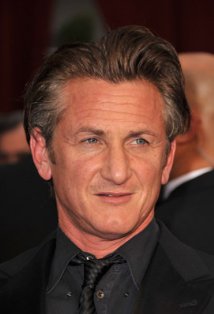
Sean Penn's time spent behind the camera may be less heralded than Mel Gibson's, but that does not mean his films do not contain some genuinely creepy imagery. I speak primarily of The Pledge, the 2001 dramatic thriller not seen by too many people. It's the story of a retiring chief of police (Jack Nicholson) who makes a promise to a mourning mother that he will not stop looking for the maniac that took the life of her daughter. Early on in the film, Nicholson's Jerry Black has a nightmare in which he rushes into a church and sees before him a defiled altar covered in the blood of the murdered girl. And standing over her, covered in blood and with a completely insane smile on his face, is genre fave Tom Noonan. The camera rushes at his face with inhuman speed, forcing the audience up close against this walking nightmare. It is a scene that literally scared the shit out of me in theaters the first time I saw it. While The Pledge is a dark and somber movie for its entire running time, this nightmare sequence is the only jarring and graphic moment in the film. It is expertly assembled and crafted. While I get the feeling that Sean Penn would not work within our genre, figuring it was beneath him, I can't help but wonder what kind of output we could receive should he ever give it a shot. None of Penn's films have ever really been large in scope, as he instead chooses to focus on small and contained stories about flawed people. So find him something small and contained with horrific elements, and let him do what he does.

Perfect Project: While perhaps not obviously horror, I'd love to see what he could do with a fresh adaptation of Bradbury's Fahrenheit 451. It's a dour book with a not-too-optimistic look at our future, and it has an underlying political tone that someone like Penn could not resist. It would be a little outside of his comfort zone, but that might be good for him. Penn's last two directorial films were based on books, and his two films before that were original scripts. Him tackling the adaptation of the book himself could result in something bleak but wonderful.

Christopher Nolan 
At this point, I think Nolan can do no wrong. Now is the time for him to hop right into our genre and show what he can do. This man has run the gamut of all the genres thus far. He's given us thrillers and dramas, as well as both crazy mind-fuck and exhilarating action. What's left for him to do but a comedy? Horror, my friend—that's what. The melancholy tone present in all his films would mix well in the world of the horrific. I see him tackling quite well a Shutter Island-esque horror tale as you witness the psychological breakdown of your main character. But at the same time, he can go big, as he's proven with Inception and The Dark Knight. And speaking of Inception, the scene where Ellen Page's Ariadne first meets Marion Cotillard's Mal is shockingly creepy. Cotillard's glare as Ariadne and Cobb retreat back up the elevator - and those dark eyes follow for most of their ascension - is chilling. Besides, Insomnia (the director's most under-appreciated film—and my personal favorite) as well as The Prestige has shown the man can descend into darkness with the best of them and come out with something both thrilling and poignant. While his films may not be overtly horrific, it's the darkness that lie within his characters - and what they're willing to do to each other or themselves - that make him a perfect horror candidate.

Perfect Project: Guillermo Del Toro's first book of his vampire trilogy The Strain. Nolan has already proven he can handle the more fantastical with his Batman films, and it's about time Hollywood apologized for all the fairy vamps of late and showed that they prefer to rip off heads rather than go to geometry.

Nicolas Winding Refn
Bronson got his name circulating, but Drive put him on the map. Both critics and fans embraced the oddly quiet story about a mentally unstable Hollywood stunt driver who gets in deep with some very bad men. No, there's not a lot of driving in a movie called Drive, but that doesn't make it any less awesome, either. Refn has a creative mind, and there are shots in Drive that look ripped directly from Kubrick's version of The Shining. The motel room scene is incredibly suspenseful and dripping with red; and the scene where Gosling's character slowly approaches the entrance to Nero's Pizzeria wearing his humanoid face mask doesn't quite feel like it belongs in a movie that is essentially John Hughes' Taxi Driver. Shortly after Drive's release, Refn was courted for all kinds of Hollywood projects, including the now-filming Die Hard 5 (under the direction of John Moore - ugh). While it's probably best he avoided that particular project, you can't help but wonder what other Hollywood properties - actual or potential - that he would be good for...


Perfect Project: A adaptation of the videogame Alan Wake ("Eew, no!" you say). Refn's lead characters are unstable and solitary men on a not-so-typical journey. And there's no one more solitary than novelist Alan Wake, who begins to investigate his wife's disappearance, all the while set-pieces from his own novels seem to be existing in the strange town of Bright Falls.

Bill Paxton
I know, I know. The man already has Frailty under his belt —and the movie is damn good. Perhaps it was the pitiful box office returns from his directorial debut that scared him away from the horror genre (I believe it was the first Resident Evil that was sucking up all the horror fans' money that season at the box office), but with a pedigree like Paxton's, I find it hard to believe the man has not revisited the horror genre. For a man who got his start in films like Aliens, The Terminator, and Predator 2 (and was killed by each titular monster), along with the incredible Near Dark, I have a feeling the man is itching to get back into the genre. Bill Paxton's last few roles in film and television have been rather subdued and quiet—kind of strange for a man who played all manner of quirky and obnoxious characters in the past, such as Aliens' Private Hudson or Weird Science's Chet. The last "fun" part he played was in 2004's Club Dread, and his role as Coconut Pete showed he still wanted to party.

Perfect Project: Jonathan L. Howard has authored three books now in the Johannes Cabal series, the first being Johannes Cabal: The Necromancer. It is a highly unusual book about the dark arts, the debate over the significance of the soul, and a wager between man and devil. And your guide on this demented journey is the ever sarcastic Joannes Cabal. The book is goofy, horrific and laugh-out-loud funny. Paxton has already showed he's capable of doing all three...now let's see him do it all at one time.

Honorable Mentions: Oliver Stone dabbled once in horror with his creepy cheapy The Hand starring Michael Caine, but his penchant for slimy characters (like, say, Natural Born Killers) makes me want him to take on author Donald Ray Pollock's The Devil All the Time.  And if Bill Paxton wouldn't want to take on Johannes Cabal: The Necromancer, I can see the Coen Bros. picking up the slack, as the book's odd tone would perfectly suit their own quirky style. Lastly, (and oddly), Adult Swim's Tim & Eric have proven in many of their skits that they have a truly macabre sense of humor. Give them something splattery and ridiculous to sink their teeth into—perhaps an Evil Dead 2-ish film of teen hijinks and flying body parts. One thing is for sure, it would be R-rated, original, and entirely fucked up.

Wednesday, March 7, 2012

UNSUNG HORRORS: FRAILTY

Every once in a while, a genuinely great horror movie—one that would rightfully be considered a classic, had it gotten more exposure and love at the box office—makes an appearance. It comes, no one notices, and it goes. But movies like this are important. They need to be treasured and remembered. If intelligent, original horror is supported, then that's what we'll begin to receive, in droves. We need to make these movies a part of the legendary genre we hold so dear. Because these are the unsung horrors. These are the movies that should have been successful, but were instead ignored. They should be rightfully praised for the freshness and intelligence and craft that they have contributed to our genre.

So, better late than never, we’re going to celebrate them now… one at a time.

Dir. Bill Paxton
2001
Lionsgate Films
United States

“I cannot imagine a God who rewards and punishes the objects of his creation and is but a reflection of human frailty.”
— Albert Einstein

Frailty is a sobering look at the impact of religion on the American family. On its surface it’s about demons that may or may not exist, and one man’s belief that he was chosen to slay them with God-given weapons. But at its core it’s about the family unit. It’s about a man and his two sons, and how they are torn apart when one son follows the father, and one does not. And who is right? The son who follows unconditionally, or the son who questions orders and rebels at all costs? The movie is about free will verses destiny. It’s about knowing when to think for yourself, and when to recognize that you’ve become a man. And it’s about realizing everything you know is wrong.

There’s a scene in the beginning of the film where the family sits down to share dinner together. The younger son spoons a large helping of peas onto his plate.

Dad exclaims, “Whoa, Tiger! Save some for us!”

“I sure love peas!” the son shouts.

“I bet! You better be careful or you’ll turn into one!” Dad replies.


Yes, the dialogue exchange is unbearable corny and clichéd. You may even roll your eyes, and that’s fine. That's the point. It’s supposed to come across that way. The filmmakers are willing to embarrass themselves by showing you that this is a typical, American, drama-free, completely undiluted, and ably functioning family. There is not even a hint of something dark and seedy simmering under the surface. Dad is normal. The kids are normal. Life is…normal.

Until God talks to Dad...

It’s a fierce, black, rainy night when Fenton Meiks (Matthew McConaughey) confesses to FBI Agent Wesley Doyle (Powers Boothe) that he knows the identity of the serial murderer plaguing rural Texas who the media has dubbed the God’s Hands killer. Fenton confesses that it’s his own brother, Adam, who earlier in the night took his life because he couldn’t stand what he had become. Being that Fenton has stolen the ambulance containing his brother’s dead body and driven it directly to the FBI headquarters in Dallas, Agent Doyle is understandably wary of anything Fenton might have to tell him. But as the night grows late, Fenton reenacts the past for Agent Doyle, explaining that the events that led up to this night were set in motion long ago…by the boys’ father.

In this past, Bill Paxton plays Dad, the aforementioned father of two sons: Fenton (Matt O’Leary) and Adam (Jeremy Sumpter). The boys’ mother died years ago, and so it’s been just the three of them against the world—which suited them fine. As Fenton says in the movie, “we didn’t need anyone else.” Dad worked as a mechanic during the day, but always came home to his sons in the evening and spent as much time with them as he could. Fenton and Adam, separated by only a few years, lived fairly typical lives, though Fenton was tasked with some of the duties his deceased mother likely would have handled (cooking dinner for the family, keeping an extra eye on Adam). The three were close, and despite the loss of their mother, the boys were happy. They went to the movies, laughed about girls throwing up, and did other things brothers/boys do.

It all changes the night Dad wakes them up in the middle of the night and explains to them both that in a strange vision, in which he was visited by an angel, he learns he was chosen by God to slay demons living amongst humanity in human shells. His weapons in this crusade consist of an ax named Otis, a lead pipe, and a pair of work gloves. To determine who is a demon and who is not, he is to lay his hands upon them, and their sins will be revealed.

Understandably, Fenton immediately doubts his father’s claims, wondering if the stress of single-fatherhood has finally taken its toll. Adam, however, is quick to believe; his young age makes him prone to easily accepting such claims, and if his own father believed them, then why shouldn’t he? Why would his own father lie to him?

The hunt soon begins. Dad orders Fenton to take part, and the boy at first refuses…that is until he realizes that he really has no choice. As much as he believes that his father has gone insane, he still loves him and does not want the family to be torn apart.

It all leads to shocking conclusions that cap off the past sequence as well as the present. Additionally, Frailty ends with my favorite kind of twist—which I won’t reveal here. But those who have seen the film know exactly what I mean.


Bill Paxton does a fantastic job with his meaty role in front of the camera. It’s a tough one to pull off, as he has to bring humanity to a role that audiences will have no choice but to vilify and fear almost from the very beginning. To make the role of Dad clearly villainous and cartoonish would have been a disservice to the smart story by the Texas-born Brent Hanley. Of course it would’ve been easy to root against the “antagonist” as he slithers around grinning ear to ear like Nicolas Cage, covered in blood, punctuating each kill with a truly bad pun. But it’s the strength of Paxton as an actor that he can make Dad flawed, human, and sympathetic—all the while making you feel uncomfortable and hesitant whenever he is on screen. (This is something I often bring up in reviews. I always find characters that skirt the line between antagonist and protagonist to be the most interesting, and the role of Dad is no different.) Put yourself in young Fenton’s shoes: how far would you be willing to go to follow your father? For you, what would be the line between real life and insanity? To our eyes, what Dad is doing is clearly wrong, but he doesn’t believe it to be. He believes he is doing God’s work, and it’s because of this that his work is carried out with care and concern. Like Abraham from the Bible, Dad loves his sons more than anything, but it’s the love for his God that will determine his actions.

Matt O’Leary and Jeremy Sumpter do commendable work with their roles. Let’s be honest, child actors are always a gamble. Their inability to grasp the concept of the kind of movie they are making is always reflected in their performance. Luckily, these two know what they’re doing.

O’Learly puts more work and effort into his role than most established adult actors. He sweats and bleeds and suffers with his character—it gets to the point where you wish you could pluck him off the screen just to get him away from all the misery his life has become. The movie rides on his shoulders, and he pulls it off gracefully.

Younger Sumpter, too, has a tough job. He is reciting lines that, at his young age, must have little to no meaning. The real-life complexities of the idea of a “God” and what people who believe in him are willing to do, even things that seemingly violate basic tenets one learns early on in life—it’s a tough thing for even adults to work their mind around, let alone a child of Sumpter’s age. But he plays his part with great confidence and assurance.

The young actors’ chemistry as brothers is believable, and especially in the case of Sumpter, their performances are utterly in line with how real people would react to such a trauma. As Adam begins to follow his father more and more, he, too, does not become comic bookish and antagonistic. He avoids turning into The Bad Seed. Adam wants nothing more than to follow in his father’s footsteps, even going as far as producing his own “demon list” that God allegedly gave to him—filled with the names of people that have bullied him in the past. The scene in which Dad explains the difference between destroying demons and killing people is morbidly funny. From Fenton’s disbelieving point of view, Dad is clearly out of his mind, and so this explanation between destroying demons and killing humans is hypocritical. (Additionally, there is one sequence in the film where Dad is forced to take the life of a human being in order to protect “the mission”—and upon doing so, he immediately vomits and begins to sob as his sons bury the body, lamenting what he was “forced” to do—that he has only just now become a murderer.)

As Fenton suffers through one punishment after another for not following orders, Adam urges his brother to conform—to believe in his family and accept his own responsibility. He does so with the love and admiration a younger brother has for his older. In his mind, Adam is unable to see why Fenton just won’t join them. It’s intelligently and realistically done.

Powers Boothe will always be a dependable bad ass, no matter the role he is playing. And while he might not have much to do during the first 2/3rds of the film, it’s the last act that shows even as someone as deeply intimidating as Boothe can be shaken under the right circumstances. He so rarely gets to play someone with weakness that when it does happen, it makes the events causing his transformation that much more disturbing.


Despite his slew of truly brainless rom-coms, Matthew McConaughey will always be an actor who makes me turn one eye towards whatever project he has in the works. Yes, he’s made a shit ton of truly inexorable movies (most with Kate Hudson), but his roles in A Time to Kill, Lincoln Lawyer, and even We Are Marshall proves he has the chops to pull off a great performance, so long as he’s got the passion to do so. His role in Frailty is one that’s quite understated, dark, and disconcerting. Like O'Leary, it’s up to him to make this movie work, and it’s because of him that it does. His performance is supposed to make you think he’s insane, but at the same time, possibly telling the truth—all at once. You’re supposed to question what you are seeing and hearing at all times, because as McConaughey looks at you with his thousand-mile stare, and as his eyes shimmer from the appearance of tears despite the lack of emotion on his face, you have to know that there’s something not 100% right about Fenton Meiks. What filmmakers call an unreliable narrator is the one leading us on this journey into the past—so everything you see on screen must be doubted. Nothing is to be believed.

Lastly, we have Otis, who plays the ax. Yes, the odd choice to have a random name carved into the ax's handle might seem erroneous until you realize that the ax really is a character. Never in the movie is it just a random household tool, but rather something that has the power to tear apart whole families. It comes to represent what Fenton believes to be the lie – the insanity – his father insists on perpetuating. 

The direction by Paxton is quite assured for a first time director. Most actors can make that leap successfully and Paxton is no different. The first appearance of the Meiks house – a former and very isolated residence of the gardeners who tended the Thurman Rose Garden, where the bodies of “demons” are soon to be buried – is haunting, nostalgic, and saddening all at once. As the brother burst from the trees and their large, white, farm-style house looms into view, the music (a subtly simmering score by the usually bombastic Brian Tyler) ceases, and the sounds of cicadas fill the screen. It’s perhaps the most beautiful shot in the film—a fuzzily recollected memory from childhood.

Another sequence that deserves special mention is the taking of the second “demon,” where Fenton is forced to play the part of an upset and crying boy whose dog, Trixie, won’t come out from under the demon’s car. What the soon-to-be-victim thinks are tears of sadness coming from this boy are actually from fear, as Fenton knows what’s about to happen.

(As an aside, the movie also makes awesome use of Johnny Cash’s “Peace in the Valley” in two very well done and connected sequences.)


Frailty is a movie whose ending I am desperate to dissect and explain in all kinds of tangential ways why it’s so awesome, but to those who haven’t yet seen this film, I would hate to ruin it. What I can say about Frailty, however, is that above all, it’s terrifying…because it could happen. And it does, every day. Even today entire wars are begun over the belief that God speaks through his followers and orders them to destroy the unclean and the infidel. And really…what’s scarier? Jason Voorhees wielding an ax and coming at you…or your own father killing someone else in front of you as you beg and plead him to stop?

Most films based on faith, religion, and peoples’ ties to both tend to come down on one side of the fence: either religion is good, or bad. Frailty manages to show you that it’s both. It shows you what it’s done to a simple family that, after losing their wife/mother, has already suffered enough. But it also shows you that sometimes you’re right to have faith, and you’re right to follow it, no matter the circumstances.